And grok used to mean “understand”, not “nazi shithead propaganda machine”.
And meme used to refer to a unit of cultural information that spreads by imitation, not a funny picture on social media.
In fairness to memes, that definition is still largely true, its just that the common usage tends to refer to this specific form of meme. Like with squares and rectangles, not all anthropological memes are image macros, but all image macro memes are a subset of anthropological memes
This feels like your boss saying you get a company car and then giving you a scale model of a car with the company logo on it.
Memes are absolutely fascinating
It was one of my favorite words.
Such is life
From Stranger in a Strange Land by Robert A. Heinlein. I wonder if the estate could sue for damages.
We still have extortion
The X makes it cool 😎
(I see the Futurama reference didn’t work sorry)
It’s only because someone else took the letter X and made it objectively uncool. What a shithead.
True. I forgot about that. Mostly because fuck Twitter and that guy anyway.
TIL grok is an actual word.
I recommend Stranger In A Strange Land by Robert Heinlein. It’s a pretty influential work of early science fiction.
Mind you, it’s been like 30 years since I read any Heinlein. Not sure I’d feel the same way about his stuff now as late teen me did, but the many books of his I read definitely shaped a lot of my philosophy.
LOL. That’s great. Yeah, it really doesn’t hold up. I think a lot of my enjoyment of Heinlein came from being a horny teen with a Christian upbringing seeing a different take on sexuality. Stranger in a Strange Land was one of the last of his I read and not my favourite. The Number of The Beast was the first one of his I read.
Edit: Apparently I watched that video 6 years ago and left a comment. I’ve been a subscriber to that channel for a while.
deleted by creator
It’s from Stranger In A Strange Land. Overly Sarcastic Productions has a great summary of that book on their channel
Yeah no sorry the origin was always gross. Stranger in a strange land is just heinlein’s weird fetish porn where he justifies old men sleeping with young girls (sound familiar?)
And grok was always a term used by weirdos who thought the book was deep for some crazy reason and wanted to sound like they were part of this insider intellectuals club
Please don’t interpret this as a defense of Robert Heinlein’s books as it has been decades since I read them and it sounds like you might be more familiar with them. But weren’t all the women in Stranger in a Strange Land older than Michael Valentine Smith?
Are you confusing the character with Lazarus Long from Time Enough for Love, et al? I think he was thousands of years older than some of his (adult) love interests…
That’s a rather puritan and skewed perspective. Afaik Stranger in a Strange Land is a very weird book but very tame and not pornographic at all. And it was an important artwork that explored the themes of the 60s sexual revolution. A time where people knew very little about sex and gender and questioned everything.
What? He gets freaky in some other books, but Stranger is pretty clean for a free love manifesto. Every character I can think of was a full grown adult, I don’t think there’s a single scene even euphemistically depicting an old man sleeping with a young girl. All the sex even referred to was between people of relatively close age.
Grok just means to understand/drink fully. You drink water, and it becomes a part of your body. You understand an idea, and it becomes part of your mind. It’s an efficient word to communicate “understanding something fully enough to functionally incorporate it into your worldview”. It’s not that intellectual.
I dunno. I only ever used it as shorthand for being able to understand the basics of something. Also, words can change for the better. So in this case it went
gross -> fine -> gross.
Grok was also a support character in the game Paladins.
I’m going to keep using it as a verb. If people are dumb enough to assume I’m dumb enough to use xai, that’s not my problem.
I used to be with it. Then they changed what it was.
Now what I’m with isn’t it
Now what I’m with isn’t ‘it’ anymore and what’s ‘it’ seems weird and scary to me.
It’ll happen to YOU!
Stop it! You’re scaring me from 20 years ago!
No way man! I’m gonna keep rockin’ forever…
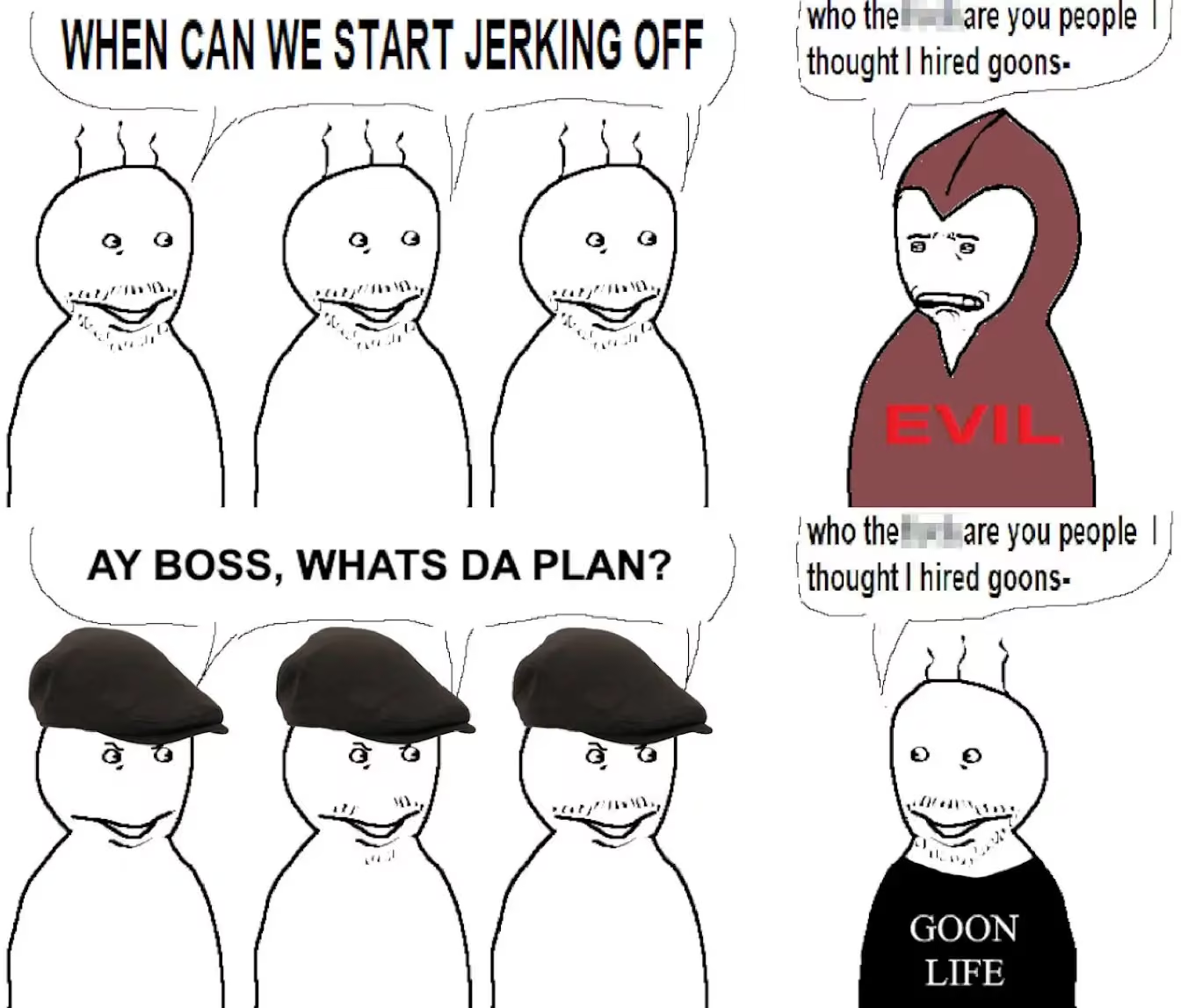
Yeah, you did hire goons, but you wanted gooners… And who is that to right one supposed to be? How is a maffia boss some dude with what looks like an assassin cloak with “Evil” written on it?
You think you’re annoyed?
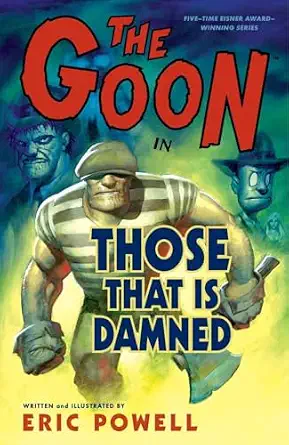
The Goon by Eric Powell.
In a town full of zombies, degenerates, mad scientists, and assorted weirdos a two fisted thug runs things his way.
“a two fisted thug”
Ah yes, Johnny two fists.
it’s a pulp fiction kinda thing.
no, not the film
Forget you ignorant bottle babies!
I’m reclaiming goon, two fisted and ‘a dame with hair on her chest!’*
[* a compliment to Mrs. Nick Charles in ‘The Thin Man.’]
Master of gooning.
sigh this movie’s never getting made, is it?
To be honest, I don’t think every comic needs to be a movie.
And ‘goon’ was used for decades before it got it’s latest meaning.
https://bookshop.org/p/books/a-visit-from-the-goon-squad-jennifer-egan/fcd66a7ef19631b1
There was a proof of concept trailer (which looked great - with Clancy brown and Paul giamati doing voices) and a kickstarter to make a storyboard back in 2012. Then in 2022 supposedly Netflix picked it up, but it haven’t heard anything since.
We already got a Popeye movie, and we don’t need to make another.
Are they still making feature length porn parodies?
“They’re never bringing me back. I’m not sure I’d like it either, they’re going to make me… you know… not that there’s anything wrong with that, it’s just not me”
The Gay GhostThe Goon
The Goonies would never work in these times. Kinda glad I grew up when I did.
It could work as an adult film
Down here, it’s our time. It’s our time down here. That’s all over the second we ride up Troy’s bucket.
That’s my mom’s favorite part!
I’ll bet a dollar it already is.
I mean, the pirate’s named One-Eyed Willy for cryin out loud
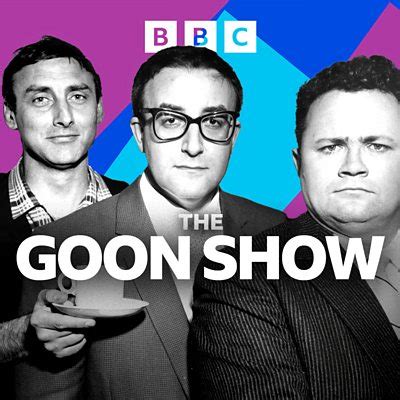
Spike Milligan used it as meaning idiots/simpletons but says he first new the word from Alice the Goon
I miss when gay means happy.
Okay I’m not that old but i had a boss who said he’s old enough to remember when gay literally means happy.
For me, my little pet peeve is when society changed the meaning of ironic to mean joking or satirical.
For me, my little pet peeve is when society changed the meaning of ironic to mean joking or satirical.
Did they ‘literally’ changed it?
Perhaps not officially but i can see scholars eventually yielding to equate irony to mean satire.
I remember growing up when the word ultimate is used everywhere and being equated to “super duper”. I later learned it ultimately (no pun intended) means final. I guess the same will happen to the word irony now also to mean satire.
That’s literally insane
that
I can’t believe you’d use the word like this!
My little pet peeve is when society changed the meaning of ironic to mean joking or satirical.
Satire: noun: wit, irony, or sarcasm used to expose and discredit vice or folly.
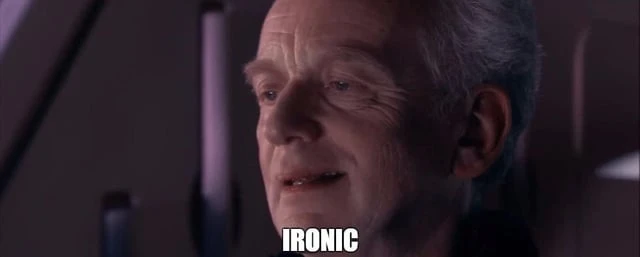
I would argue irony is PART of satire, not irony is satire.
I agree, but also I just really like Sheevposting.
Relevant sketch from A Bit of Fry & Laurie from ~30 years ago.
Ironically (given the original name of this community), the ancient Chinese had entire discourses on the idea that in order for society to function correctly, people needed to be able to agree what words meant.
A superior man, in regard to what he does not know, shows a cautious reserve. If names be not correct, language is not in accordance with the truth of things. If language be not in accordance with the truth of things, affairs cannot be carried on to success. When affairs cannot be carried on to success, proprieties and music will not flourish. When proprieties and music do not flourish, punishments will not be properly awarded. When punishments are not properly awarded, the people do not know how to move hand or foot. Therefore a superior man considers it necessary that the names he uses may be spoken appropriately, and also that what he speaks may be carried out appropriately. What the superior man requires is just that in his words there may be nothing incorrect.
–Master Kong (AKA Confucius)
https://ctext.org/analects/zi-lu
The established names of the later kings: penal and legal terms followed those of Shang, noble titles followed those of Zhou, literary titles followed those of Li. As for miscellaneous names applied to all things, they conformed to the established customs and conventions of Zhuxia; in distant regions with different local customs, these were adapted accordingly for general understanding.
As for miscellaneous names applied to people: the inherent nature that causes a person to be what he is called “xing.” The harmony of xing gives rise to refined interactions and responsive 感应; when things occur effortlessly and naturally without deliberate action, this is called xing. The inclinations of xing—liking, disliking, joy, anger, sorrow, and happiness—are called qing. When the emotions arise and the mind makes choices in response, this is called lü (deliberation). When the mind deliberates and is thus able to act intentionally, this is called wei. When deliberation accumulates and becomes habitual, and only then achieves formation, it is called wei. Acting in accordance with what is righteous and beneficial is called shi (affairs or actions). Acting in accordance with righteousness is called xing (conduct or behavior). The capacity for knowledge within a person is called zhi. When knowledge aligns with something, it is called zhi (wisdom). The capacity for action within a person is called neng. When ability aligns with something, it is also called neng (capability). When xing is harmed, it is called bing (illness or affliction). A person’s encounter with measured circumstances is called ming (fate or destiny): these are the miscellaneous names applied to people, and they represent the established terms of later kings.
Therefore, when a sovereign establishes names, once names are fixed and realities distinguished, the Way is put into practice and aspirations become clear; thus, he carefully leads the people toward unity. Therefore, to split words and arbitrarily create names in order to confuse established terms, causing the people to be doubtful and leading to frequent disputes among them, is called a great jian (great villain or great wrongdoer). Their crime is still akin to that of falsifying tokens, seals, and measurements. Therefore, the people dare not fabricate strange words to confuse established names; thus, their people are sincere and upright. Sincerity makes them easy to lead, and being easy to lead leads to public harmony. The people dare not fabricate strange terms to confuse established names, so they remain unified in the Way and law, and are careful to follow commands. If this is done, then their legacy will be enduring. An enduring legacy and accomplished achievements represent the highest attainment of governance. This is the achievement of carefully upholding the conventions of names. Now that the sage kings have passed away, the guardianship of names has become lax; strange terms arise, and the correspondence between names and realities becomes confused. When the forms of right and wrong are unclear, even those officials who uphold the law and Confucian scholars who recite canonical texts also fall into disorder. If a sovereign were to arise, he would surely follow established names while also creating new ones as needed. Therefore, the reasons for having names, the basis on which things are deemed the same or different, and the essential principles of establishing names must not be overlooked.
–Master Xun
https://ctext.org/xunzi/zheng-ming
Of course, there are also plenty of modern examples of how unclear communication can cause catastrophe.
I find it interesting how obsessed the Chinese are with the quality of Chinese spoken someone speaks and also how people who can pun super hard are absolutely hilarious.
I wonder if it’s because the Chinese language (and I’m assuming we’re talking about Mandarin because there are many Chinese languages) is tonal based. The same word could mean differently based on the pronunciation so there are people who could be stickler for rules.
Yeah the prescriptivism vs descriptivism debate still rages in linguistics. The prescriptivists have been losing for decades but arguments still abound in the academics.
And just because “goon” has changed meanings doesn’t mean we don’t lean on some prescriptivism. We still agree on singular definitions for lots of words (or at least contextual definitions for words with lots of different meanings).
The euphemism treadmill is particularly annoying in psychiatry. People keep using useful diagnostic labels as mean names for people they don’t like then in an attempt to be respectful of the people we serve we use a different diagnostic label but then everybody has to learn and start using the new diagnostic label and by the time it reaches saturation it’s already an insult again.
“Gimme the good old days when a pair of boobs were a couple of dumb guys.” - Sheriff Buford T. Justice
Edited to fix attribution. I was sure it was Dangerfield, but DDG says otherwise.
Boob or booby to mean stupid still lives on in boobytrap.
Sort of. Boobytrap comes from the seabird the blue-footed booby. A famously stupid seabird that sailors caught in such a trap.
remember the old days when “tweeting” meant stabbing a hooker?
-Norm MacDonald
I still think of Goon as a hockey enforcer. As a Canadian, i’m obligated to.
It’s a psy-op to protect the goons that are detaining innocents on American streets.
‘Goon’ still means Henchman.
Don’t let the vapid famewhore influencerati dictate language changes. Laugh at their obvious inability and keep being you.
Wtf are you talking about? Also, language is a social construct and words change meaning all the time. They can also mean more than one thing…
Hogwash! (I meant that as in I agree)
Vapid famewhore influencerati
Are you trying to dictate language changes? I laugh at your obvious inability
I guess we can still use ‘mooks’ for that.
vapid famewhore influencerati
Bro thought he mogged. Bro typed this and thought, “ts tuff”. Bro’s on the Canadian instance and doesn’t even know “goon” is a hockey term in Canada.
(this is me showing my “obvious inability”…whatever that means)
Gives all new meaning to David Bowie’s song Fashion.
We are the goon squad and we’re coming to town, beep beep!
Or he’s just a time traveler and knew exactly what he was doing…
Or he was David Bowie and was fucking weird
deleted by creator
I actually lol’d
goon ≠ gooner
schooner and scone are two different things two. sound similar though
confusing them is very bad.
Goon > gooner
They aren’t mutually exclusive, goons can goon.
Is a goon gooning still a goon or have they become a gooner
They aren’t mutually exclusive. They can be both.