This is not a SFW instance. NSFW communities will be tagged, and efforts will be made to keep SFW communities clean, but proceed at your own comfort level.
Fully functional, I run it currently on a Fairphone 4. Every phone feature works, AFAIK. Native app selection could be better, but android apps work via waydroid. Probably not banking apps, though… Haven’t even tried. :D
I think that on fairphone 5 it works, but not on fp6. As far as I can remember, I checked quite some time ago. Out of curiosity, what do you need the ram for?
Run a server at home with a big GPU, set up a VPN to get remote access, get access to high quality self-hosted models regardless of how much RAM your phone has
I think soon you can have a fully functional phone without apple, google etc. So Graphene is the only one today, what do you think about fairphone (I don’t know which os it uses)?
Fairphobe is neat but I’d never use it. Underpowered device, weak hardware security. It seems it can run many OSes, idk which it comes with.
I only recommend GrapheneOS as a mobile OS because it takes phone security seriously. With the rise of surveillance capitalism and fascism, people need devices with strong security guarantees.
I don’t recommend Linux phones because often lack of basically any security. Desktop OSes have very different threat models compared to mobile OSes. Desktop linux (which Linux phones basically still are) lack strong software security because nothing is properly isolated and it is trivial for malware to exploit 0days or run persistent under your user (I can link to my comment on the insecurity of desktop Linux, which applies to most desktop OSes). Android has protected against most of the recent Local Privilege Escalation attacks present in the Linux kernel (eg copyfail) because of its security design. Pre-emptive security practices are important.
There is no privacy without security. There is no privacy without open source.
For the foreseeable future it’ll unfortunately only be fully functional in countries where you don’t use a mobile auth and signing service. Which, okay, I can skip in my country and use an ID card instead, but then I have to have a card reader on me whenever I need to sign into any government services or bank
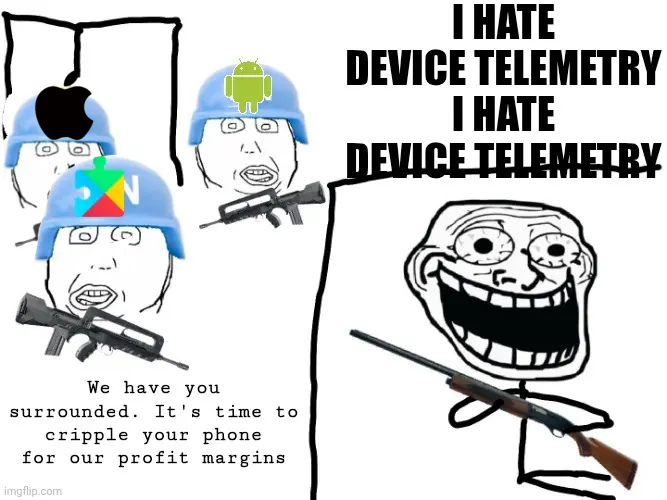

SailfishOS is proprietary. I would never trust a proprietary OS with my privacy.
Is there any other functional Linux (not Android based) phone, though?
Ubuntu Touch?
… Is it functional? Which device do you have to use it on?
Fully functional, I run it currently on a Fairphone 4. Every phone feature works, AFAIK. Native app selection could be better, but android apps work via waydroid. Probably not banking apps, though… Haven’t even tried. :D
Oh, cool! Does it also work on more modern hardware like the Fairphone 6…? I need more raaaammmm
I think that on fairphone 5 it works, but not on fp6. As far as I can remember, I checked quite some time ago. Out of curiosity, what do you need the ram for?
running local AI models lol
and also like, having multiple apps open without them running out of memory and reloading, that’s annoying
Run a server at home with a big GPU, set up a VPN to get remote access, get access to high quality self-hosted models regardless of how much RAM your phone has
postmarketos is almost functional
Android is too, so…
AOSP is fully open source. Google certified Android isn’t.
Sailfish is proprietary Linux. Gapps Android is proprietary AOSP. GrapheneOS is fully open-source and AOSP-based.
I stand by my point. Never use a proprietary OS of you care about your privacy. I don’t like proprietary Linux distros.
I think soon you can have a fully functional phone without apple, google etc. So Graphene is the only one today, what do you think about fairphone (I don’t know which os it uses)?
Fairphobe is neat but I’d never use it. Underpowered device, weak hardware security. It seems it can run many OSes, idk which it comes with.
I only recommend GrapheneOS as a mobile OS because it takes phone security seriously. With the rise of surveillance capitalism and fascism, people need devices with strong security guarantees.
I don’t recommend Linux phones because often lack of basically any security. Desktop OSes have very different threat models compared to mobile OSes. Desktop linux (which Linux phones basically still are) lack strong software security because nothing is properly isolated and it is trivial for malware to exploit 0days or run persistent under your user (I can link to my comment on the insecurity of desktop Linux, which applies to most desktop OSes). Android has protected against most of the recent Local Privilege Escalation attacks present in the Linux kernel (eg copyfail) because of its security design. Pre-emptive security practices are important.
There is no privacy without security. There is no privacy without open source.
Thanks for your insights, time to wait a bit more then :-)
For the foreseeable future it’ll unfortunately only be fully functional in countries where you don’t use a mobile auth and signing service. Which, okay, I can skip in my country and use an ID card instead, but then I have to have a card reader on me whenever I need to sign into any government services or bank