This is not a SFW instance. NSFW communities will be tagged, and efforts will be made to keep SFW communities clean, but proceed at your own comfort level.
If you compare it with Gold - against which the USD moved in lockstep until the US left the Gold Standart - it’s a lot worse than just a 50% loss since 2013, more like a 65% of value.
The fall is probably the same in terms of real inflation (as actually felt by people in terms of how much less their money buys) - the official inflation figures understate inflation (probably because the mathematical calculation for GDP involves raw GDP being deflated by inflation, so the less the official inflation is the more politicians can harp about how much they made GDP “grow”) and this has been going on for decades, which is why a single blue collar salary that used to be enough for a good house, a car and the expenses for a family of 5 in the 60s, now can barelly pay the rent of small appartment in a major city.
If you compare it with bitcoin it’s even worse. Both aren’t great comparisons, the US left the gold standard so long ago it’s not a meaningful comparison.
which is why a single blue collar salary that used to be enough for a good house, a car and the expenses for a family of 5 in the 60s, now can barelly pay the rent of small appartment in a major city.
Except this isn’t remotely true. For American’s you had the 62% home ownership in 1960’s for much smaller homes (on average 700 sqft) vs 65% now for an average of 2000sqft. The average American family in 1960 owned 1 vehicle, they now own 2. They went on less vacations, moms typically had to work on top of taking care of the family (little to no daycare), oh and interest rates were much higher as well (on top of that pesky women couldn’t even own a home by themselves). Single person living was roughly 10% vs 30% now, oh and those hard working dads often didn’t live by a year past retirement. And if you were a minority? You absolutely were f’ed.
Yes, costs are higher now relative to income, but demands also are. Want cheap, you move out to rural areas, but risk you don’t have work. The same problem that has been endemic in the US since it’s inception.
62% home ownership in 1960’s for much smaller homes (on average 700 sqft) vs 65% now for an average of 2000sqft
62% -> 65% sounds reasonable.
700 sqft on average -> 2000 sqft on average is suspicious though. It’s possible stats got skewed by the top 1%, who are today richer than ever before, and own ridiculous amount of property. Median sqft perhaps would be more representative
Median square foot is close to the same. It’s cheaper to build larger than smaller in the US because of the space for expansion and developers aren’t being forced to pay for services needed when they expand suburban areas.
Yes, costs are higher now relative to income, but demands also are.
There is a dangerous underlying logic to this line of reasoning. Treating all technological innovation as an added cost to be borne by the end consumer leads to one inescapable dead end. Yes, sometimes there are actual costs. If so, fine. However, this blanket notion of hedonic price adjustment increases wealth inequality with no end. It isn’t a sensible and we should be thankful our ancestors were not so foolish or we’d all be living in trees or caves right now.
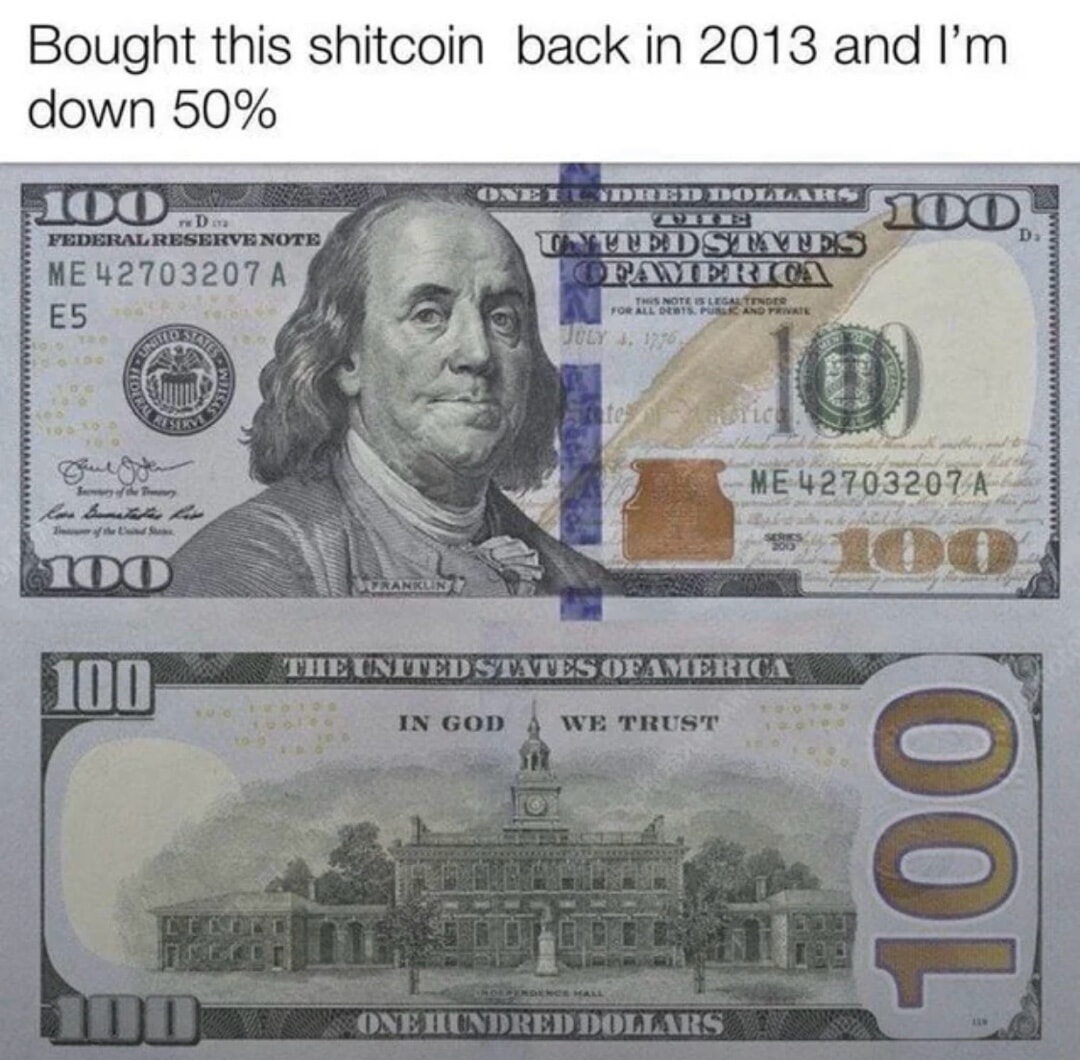
If you compare it with Gold - against which the USD moved in lockstep until the US left the Gold Standart - it’s a lot worse than just a 50% loss since 2013, more like a 65% of value.
The fall is probably the same in terms of real inflation (as actually felt by people in terms of how much less their money buys) - the official inflation figures understate inflation (probably because the mathematical calculation for GDP involves raw GDP being deflated by inflation, so the less the official inflation is the more politicians can harp about how much they made GDP “grow”) and this has been going on for decades, which is why a single blue collar salary that used to be enough for a good house, a car and the expenses for a family of 5 in the 60s, now can barelly pay the rent of small appartment in a major city.
More like the price of gold is artificially inflated far beyond any actual value.
If you compare it with bitcoin it’s even worse. Both aren’t great comparisons, the US left the gold standard so long ago it’s not a meaningful comparison.
But that wouldn’t be a fair comparison. The prices of gold and dollars are stable. Bitcoin was invented in 2009 and is still in price discovery.
It’s almost like that’s my point.
Ah I thought you were implying bitcoin was stable my bad
Ah, aha, all good
Except this isn’t remotely true. For American’s you had the 62% home ownership in 1960’s for much smaller homes (on average 700 sqft) vs 65% now for an average of 2000sqft. The average American family in 1960 owned 1 vehicle, they now own 2. They went on less vacations, moms typically had to work on top of taking care of the family (little to no daycare), oh and interest rates were much higher as well (on top of that pesky women couldn’t even own a home by themselves). Single person living was roughly 10% vs 30% now, oh and those hard working dads often didn’t live by a year past retirement. And if you were a minority? You absolutely were f’ed.
Yes, costs are higher now relative to income, but demands also are. Want cheap, you move out to rural areas, but risk you don’t have work. The same problem that has been endemic in the US since it’s inception.
62% -> 65% sounds reasonable.
700 sqft on average -> 2000 sqft on average is suspicious though. It’s possible stats got skewed by the top 1%, who are today richer than ever before, and own ridiculous amount of property. Median sqft perhaps would be more representative
Median square foot is close to the same. It’s cheaper to build larger than smaller in the US because of the space for expansion and developers aren’t being forced to pay for services needed when they expand suburban areas.
There is a dangerous underlying logic to this line of reasoning. Treating all technological innovation as an added cost to be borne by the end consumer leads to one inescapable dead end. Yes, sometimes there are actual costs. If so, fine. However, this blanket notion of hedonic price adjustment increases wealth inequality with no end. It isn’t a sensible and we should be thankful our ancestors were not so foolish or we’d all be living in trees or caves right now.
Or perhaps consumerism should lay off. Wealth doesn’t happen when people don’t buy things they don’t need.
whoosh