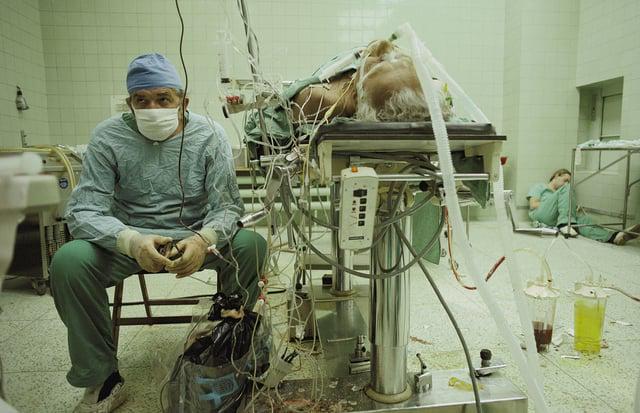
Full title: The image from 1987 shows an exhausted but vigilant Dr. Religa monitoring his patient’s vital signs after a grueling 23 hour heart transplant surgery, while one of his assistants, can be seen asleep in the corner of the operating room.
This iconic photo by James Nachtwey captures Polish cardiac surgeon Dr. Zbigniew Religa after performing the country’s first successful heart transplant, a 23-hour procedure. The assistant asleep in the corner underscores the immense physical toll on the surgical team.
I am sure there are a ton of factors involved. I am also sure that there is a lot of financial incentives to publish positive studies.
There is a huge caveat to posting a study to counter your stats above since you technically aren’t wrong. “Typically” can mean many different things, but here, it can also fit within published data.
https://pmc.ncbi.nlm.nih.gov/articles/PMC1125407/
Most articles I found usually point to roughly the same numbers as that study, but there is a lot of variation in how those numbers are presented. (Even that study initially presents stats in a way that is confusing: A percentage of a percentage of a percentage, over time.)
My point is that it’s one of those stats that is super easy view as “really good” or simultaneously “exceptionally bad”. IMHO, I still think it’s crazy that we can even do transplants at all.
Edit: I believe everyone should at least get a chance to live a bit longer, but it sucks that it comes at extreme cost. The procedures are extremely expensive and a person could potentially be put on expensive anti-rejection drugs for the remainder of their life. Add in all the follow-up appointments and occasional hiccups in recovery (adding even more cost) a person is likely going to die broke and be put through even more stress that is a very real danger to health anyway.
murrica helthker