This is not a SFW instance. NSFW communities will be tagged, and efforts will be made to keep SFW communities clean, but proceed at your own comfort level.
Was the “Cash for Clunkers” thing one of them? When that happened, I remembered wondering how it might affect the used car market later… But then I forgot to check until just now 🙈
It’s a catch 22 though, the clunkers being removed were heavy polluters. I have a 60s C10 and that thing pollutes like crazy. Looks beautiful though.
Other issues are the CAFE standards that motivated large expensive trucks and the general social change towards large SUVs. I hate those big crossovers, my wife has one and it’s a POS.
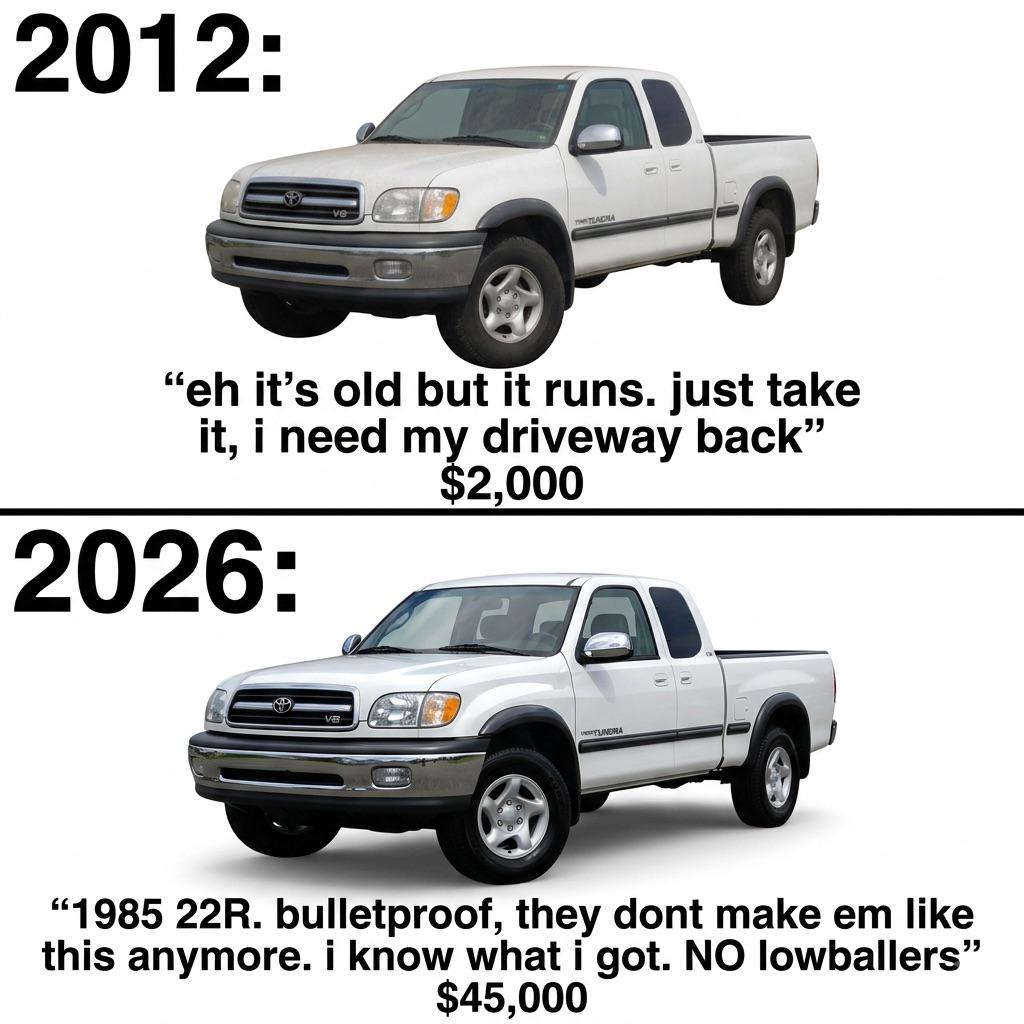
I’m not an expert, and I’m just spitballing here, but I’d say it’s some combo of the following:
anyone got any others?
Boomers were my first thought too.
Particularly car enthusiasts often overvalue their stuff, and attack everything they won’t benefit from (like EV’s, or electrification).
Was the “Cash for Clunkers” thing one of them? When that happened, I remembered wondering how it might affect the used car market later… But then I forgot to check until just now 🙈
Yeah I’m sure it was.
It’s a catch 22 though, the clunkers being removed were heavy polluters. I have a 60s C10 and that thing pollutes like crazy. Looks beautiful though.
Other issues are the CAFE standards that motivated large expensive trucks and the general social change towards large SUVs. I hate those big crossovers, my wife has one and it’s a POS.
and got replaced with trucks that were twice their size, resulting in zero net gain